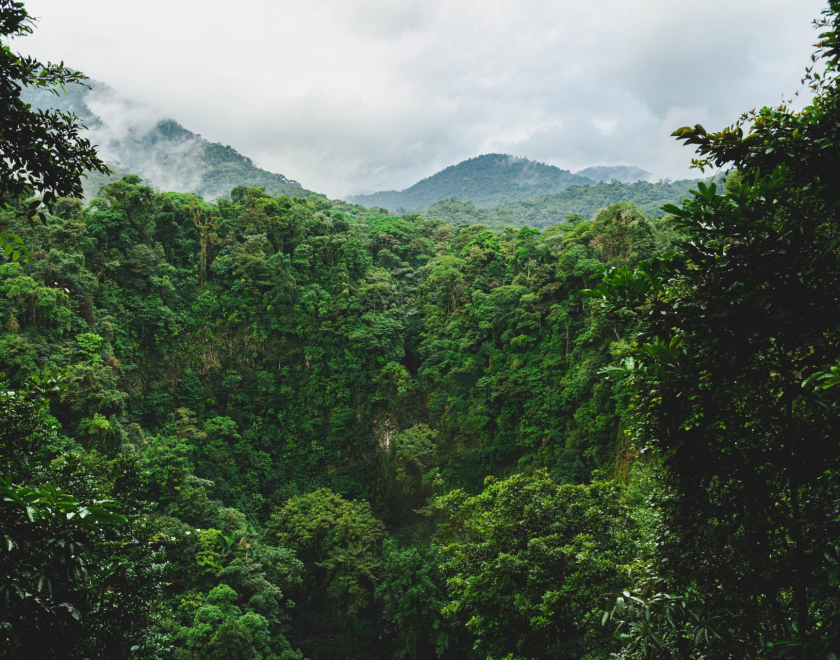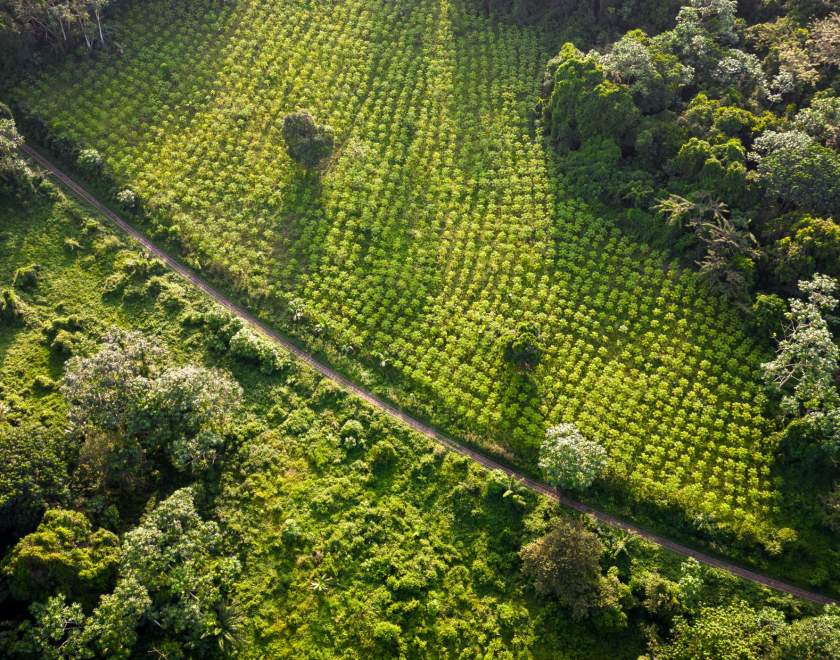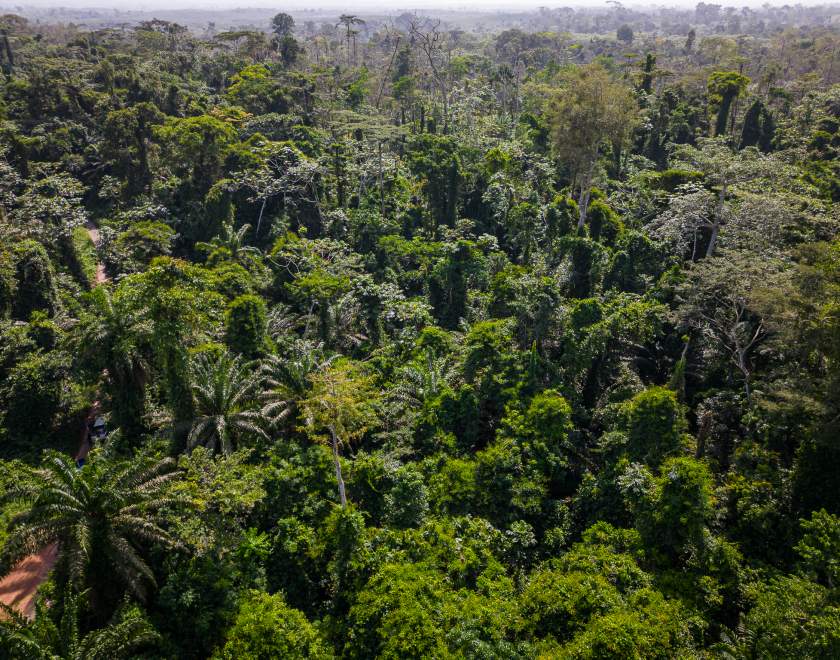
Ending cocoa-driven deforestation requires better data, shared methodologies and coordinated action to address root causes and protect forests.
By Michael Matarasso, Impact Director and Head of North America, World Cocoa Foundation
Over the past decade, the cocoa industry and cocoa producing countries have become much better at identifying and measuring deforestation. We can map farms with increasing accuracy, monitor changes in forest cover, trace cocoa through supply chains and assess where deforestation risks are concentrated. Regulation, in origin and consuming countries, is accelerating that progress, particularly through stronger expectations around traceability, deforestation risk assessment and due diligence. All of this is necessary. But understanding where deforestation occurs is only the starting point. We also need to ask whether we are changing the conditions that cause it.
Experience in cocoa-growing countries suggests that we will struggle to end cocoa-driven deforestation if we focus only on where deforestation occurs, rather than addressing the conditions that drive it. WCF’s work on deforestation and forest restoration increasingly points to a broader lesson: effective action starts with understanding the situation we are trying to change. That requires better data, stronger and more consistent methodologies, and the ability to use what we learn to continually improve our approach. Data is not simply a reporting requirement or a way to demonstrate compliance. It is the foundation for making better decisions.
Good data allows us to understand where risks are concentrated, what drives them, where to intervene and how to assess progress. Without that foundation, we risk investing in activities because they are measurable or familiar rather than because the evidence suggests they are most likely to deliver impact.
Understand what drives deforestation
The decision to clear land rarely begins at the forest boundary. It is shaped by the economic incentives and institutional conditions surrounding land use: whether farmers can make existing land productive, whether they can access finance and quality planting material, whether land and tree rights are secure, whether disease has reduced the productive life of a farm, and whether alternative sources of income exist. But these are only part of the picture. The incentives to expand also matter. When cocoa prices rise, the expected returns from cultivating additional land can increase, creating pressure to expand production even where existing farms could be made more productive. And where forest protection, land-use governance and enforcement are weak, the risks and costs associated with clearing forests may be too low to provide an effective deterrent.
In Ghana and Côte d'Ivoire, In some of the world’s leading cocoa producing countries, ageing trees, plant diseases, decreased soil fertility, and conversion of land for uses other than cocoa have reduced productivity in parts of the cocoa landscape. Rehabilitating a farm requires capital, labour, planting material and time before new trees generate income. Where those conditions are absent, expansion can appear attractive—particularly when cocoa prices make additional production economically rewarding. But productivity gains alone cannot solve the problem if expansion remains profitable and the institutional disincentives to clear forests remain weak.
That same principle applies to measuring whether our interventions are working. If we want to deliver greater impact, we need to be able to monitor results, learn and adjust our approaches. Strategies should not be static. As evidence emerges, we should adapt and redirect resources.
Make evidence work across the landscape
This is where high-quality methods become as important as high-quality data. Different actors, from both the private and public sectors, collect large amounts of data and still arrive at very different conclusions if they are using different definitions, thresholds, methodologies or approaches to measurement. For data to support collective action, it needs to be sufficiently robust, comparable, consistently generated, and shareable.
This does not mean that every company, government or organisation must use identical systems for every purpose. But where we are trying to understand a shared problem or measure collective progress, there is significant value in agreeing on common approaches to what is being measured, how it is measured and how results are interpreted. That is particularly important in a sector as complex as cocoa, where companies, governments, farmers, civil society and technical organisations each hold different pieces of the picture.
Traceability illustrates the point. Companies need to know where cocoa comes from. Governments need reliable information about farms, forests and land use. Risk assessment needs credible data. And efforts to address deforestation need to be based on a consistent understanding of what constitutes risk and how it should be measured. A supply chain can be traced farm by farm. A landscape cannot be managed company by company.
Forests sit within territories in sovereign countries where cocoa production intersects with communities, protected areas, and other competing demands for land. That means lasting forest protection depends on information and institutions that extend beyond an individual company's sourcing footprint.
This is why stronger national systems and shared approaches matter. Governments are increasingly delivering authoritative land-use, forest and traceability data, supported by traceability and forestmonitoring systems that companies can access and integrate into their own traceability and due-diligence processes. This can reduce duplication and help companies build on credible national systems. At the same time, all stakeholders need common methodologies that allow different sources of data to be interpreted consistently, rather than producing conflicting or sometimes incompatible pictures of the same landscape.
The same principle applies to restoration. Planting trees is relatively easy to count. Keeping them alive is considerably harder. If our objective is impact, then counting seedlings planted is only the beginning. We need to know whether trees survive, whether restoration is maintained over time, whether farmers have the incentives and capacity to manage them, and whether restoration is occurring in the places where it can deliver the greatest environmental and livelihood benefits.
What we measure shapes what we learn - and what we learn should shape what we do next. This is also why farmer income belongs at the centre of the forest conversation.
A productive and profitable cocoa farm does not automatically guarantee forest protection. Strong governance and enforcement remain essential. But farmers who can invest in their existing farms, diversify their incomes and withstand economic shocks have more options than those facing severe economic constraints. Environmental policy works better when those incentives point in the same direction.
Turn insight into action
WCF’s work on deforestation and forest restoration, including the next phase of the Cocoa & Forests Initiative, is helping put this approach into practice. Priorities include better national data, interoperable traceability, national forest and carbon monitoring systems, clearer land-use frameworks, and targeted restoration. They also include stronger farm economics, models that sustain productivity on existing land rather than encouraging expansion into deforested areas, effective forest protection and the incentives that support it, increased on- and off-farm income opportunities, and common approaches to measuring results.
After years of collective action involving industry and cocoa-producing country governments, we should be ambitious about what comes next. The test should not simply be whether we can demonstrate that cocoa entering a particular market is deforestation-free. We should also ask whether we understand where and why risks remain, whether interventions are delivering measurable results, whether farmers can prosper from the land they already cultivate, and whether the institutions responsible for protecting forests are becoming stronger.
We should change course if the evidence shows an approach is not working. Because the durable solution to cocoa-driven deforestation is not simply to identify where forests are at risk. It is to understand the conditions that put forests at risk, use evidence to direct action and resources to reduce those risks, and continually learn and adapt our approach based on what the evidence tells us.