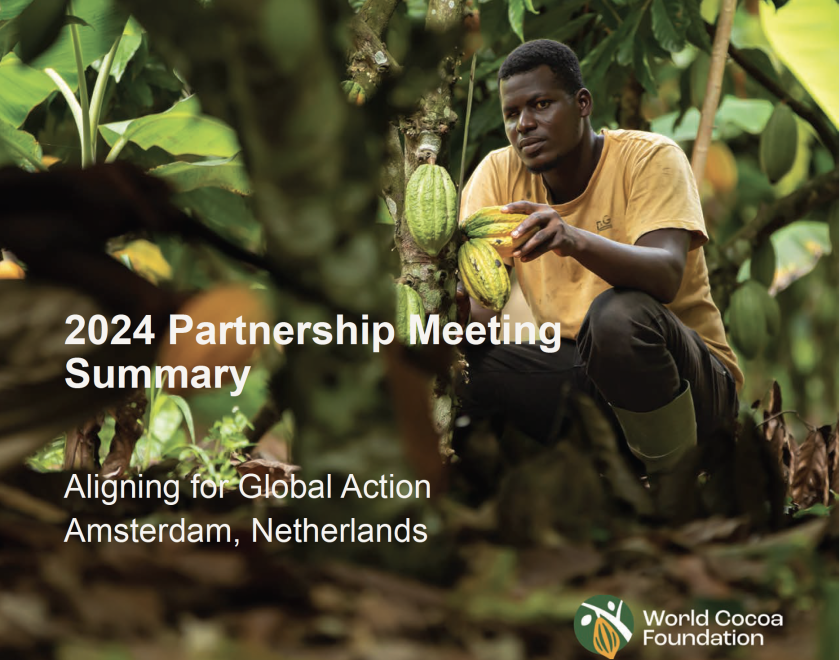
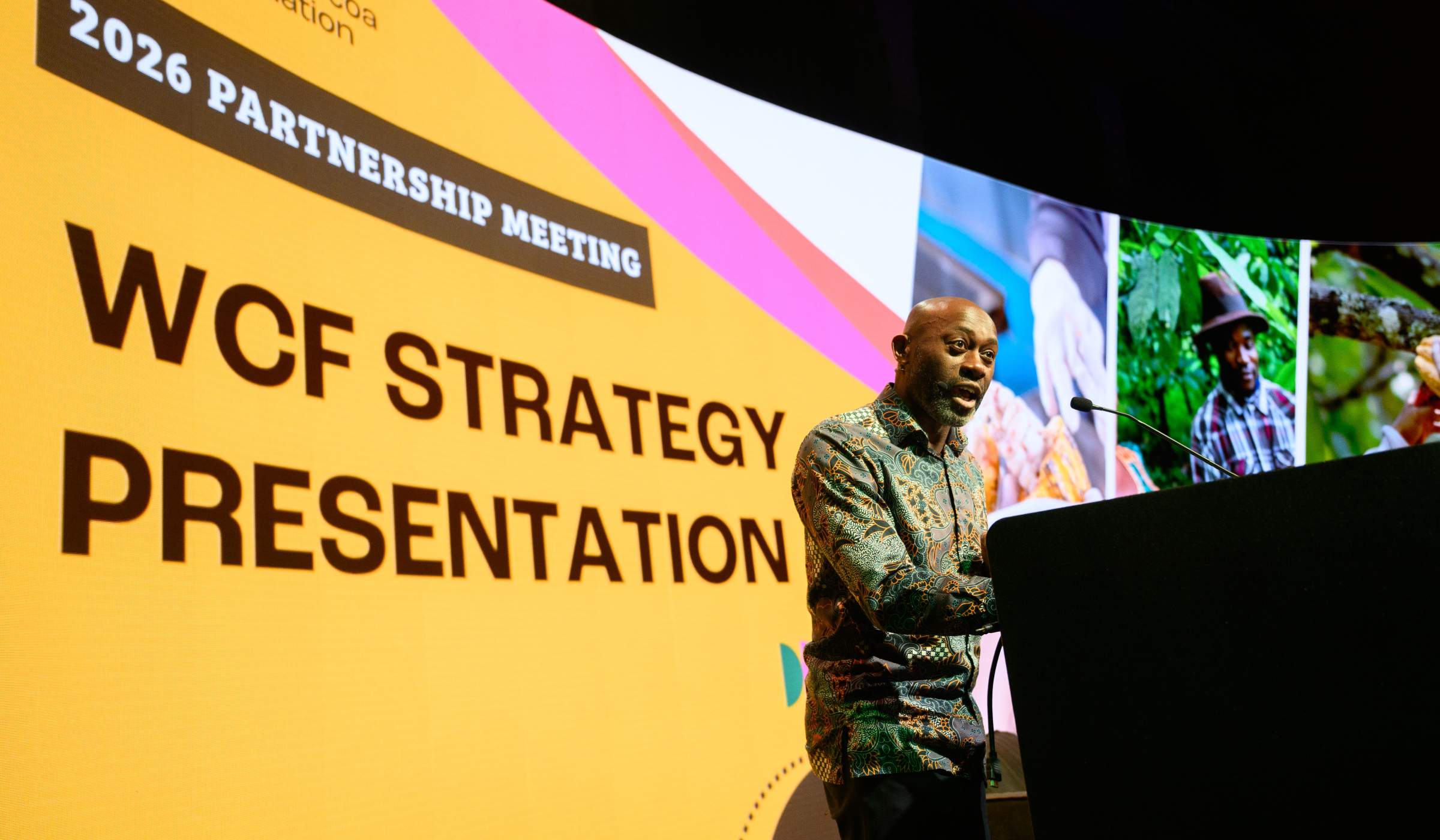
Two weeks after the Partnership Meeting in Amsterdam, the same themes keep resurfacing in follow-up calls and corridor conversations.
Not because they are new, but because they are converging faster and with higher stakes for the sector.
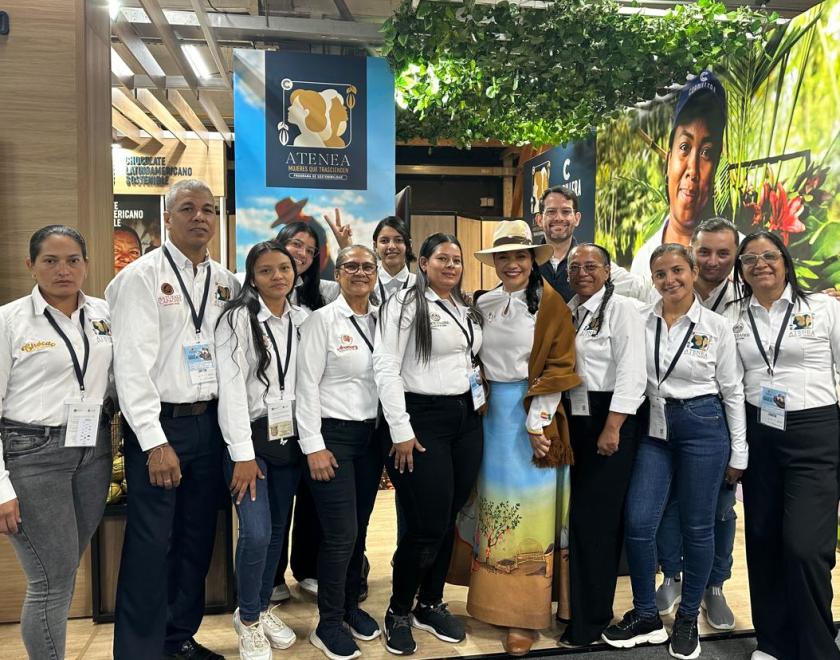
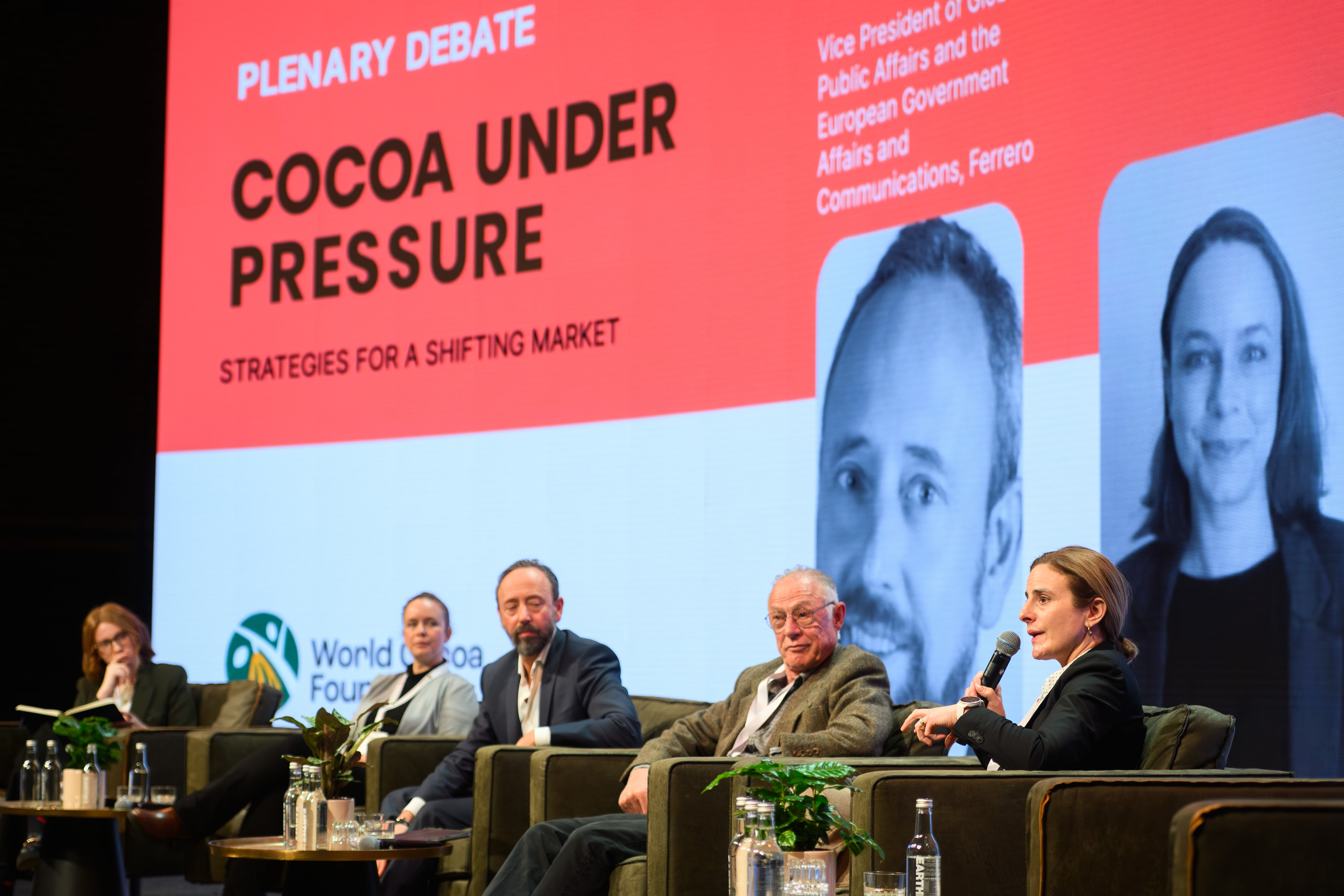
More than 500 participants from 32 countries joined us in Amsterdam, representing governments, cocoa and chocolate companies, traders and processors, retailers, farmers’ organisations, civil society, researchers and technical partners. Bringing that range into one room matters because the sector’s biggest challenges no longer sit in separate boxes. They are converging at farm level and shaping decisions across the value chain.
Price volatility was a central focus. It is not only a market issue. It shapes farmer income and incentives, affects supply security and influences the pace at which farms can invest in rehabilitation, good agricultural practices and climate adaptation. The discussion repeatedly returned to a practical question: what needs to be in place to ensure the system remains robust when prices and conditions change quickly?
Nature and compliance also featured more concretely than in previous years. Biodiversity is moving from aspiration to expectations around measurement and reporting. Participants framed it as a core production issue, with healthy landscapes underpinning long-term yields and resilience. In parallel, deforestation-free requirements and broader due diligence expectations are accelerating the need for credible, usable data.
and reforestation are central to this shift. Protecting remaining forests and restoring degraded landscapes is not only an environmental responsibility but a long-term production imperative for cocoa-growing regions. WCF will publish a position paper in the coming weeks outlining how the sector can strengthen collective action on forest protection and restoration.
Systems and interoperability formed a third major thread. Across traceability, child protection monitoring and GHG accounting, the emphasis was on alignment: shared definitions, clearer governance and approaches that work in producing countries as well as in corporate reporting. Without alignment, costs rise and impact is diluted.
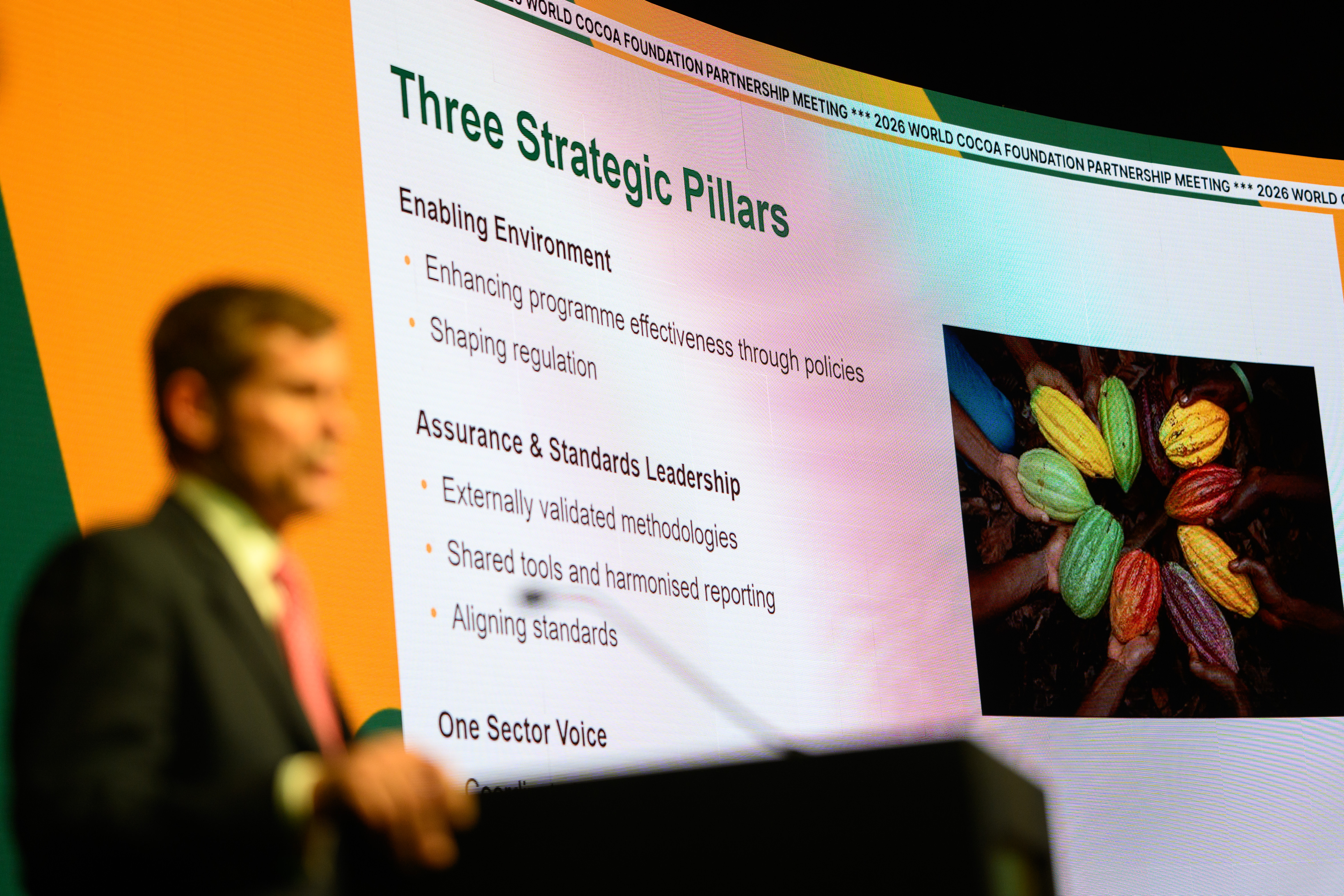
The Meeting also marked an important step in implementing WCF’s refined strategy, with a clear focus on execution and enabling delivery. In a sector facing volatility, climate pressure and rising expectations, disciplined collaboration will determine whether ambition translates into lasting impact.
The meeting has ended, but the focus on implementation continues. The year ahead will be judged less by new announcements and more by whether we can strengthen delivery on the ground, in close coordination with governments and partners at origin.
See you next year.